Thursday, December 09, 2010

On John Entwistle

John Entwistle, bassist for The Who, will be remembered by rock historians for four things: his superior playing skills, his skeleton suit, his cocaine-and-hooker induced death at 57, and his statue-like performance style, the final piece of The Who’s much-imitated, impossibly awesome on-stage aesthetic.

When we were kids, my sisters and I would often play Band. Our role-plays involved costumes (such as head bands and leather vests), make-up (for mascara beards and mustaches), and props (tennis racket guitars, chair drumsets, desk keyboards etc.) I have two sisters, leaving us one member short of the full Who line-up, so when we played The Who, an ironing board would stand in for Mr. Entwistle. After viewing a particularly blistering performance, my mother, in her review, described the board’s performance as “spot on.”

I first became aware of Entwistle’s still style while watching the epically awful film version of Tommy. He first appears, wearing a religious robe, as a musician in the entourage of Eric Clapton, who plays the part of the head preacher at a church where Marilyn Monroe is idolized as a god (as I said, the movie is epically awful). As he’s walking down the aisle behind Clapton to kick off mass, Entwistle, with impeccable posture, keeps in perfect step while ripping some absolutely deadly bass licks during a bluesy version of "The Hawker." I found this approach really, really funny. I still do.

What made the whole minimal motion schtick work, of course, was Entwistle's ridiculously, hilariously mad bass skillz. Where the rest of his body barely inched, Entwistle`s fingers raced up and down the strings like a pack of wild rhinos. And where Pete, Keith and Roger appeared more than willing to bleed for rock and roll, with their windmills, orgasm faces, and swinging microphones, Entwistle never broke a sweat, though he did occasionally crack a grin. He was the quintessence of effortless cool playing in the hottest live band of the 60s and 70s. May Marilyn bless his soul.


Isolated bass from "Won't Get Fooled Again" in 1978. The little breaths he takes before the big runs are hilarious.


Entwistle's piece de resistance, "The Real Me," from The Who's 2000 comeback show at The Royal Albert Hall. Don't love the bass tone, but wow could the dude wail on that instrument.

Labels: ,

Monday, November 29, 2010

On Keith Moon

"I'm the best Keith Moon style drummer in the world." - Keith Moon

***

Godwin’s Law-“As an online discussion grows longer, the probability of a comparison involving Nazis or Hitler approaches 1.”

Moonie’s Law-“As an online discussion about The Who grows longer, the probability that an argument about Keith Moon’s position as the greatest drummer of all time approaches 1.”

***

Literary critic and world class finger drummer James Wood has written a wonderful piece on the immortal Who skin basher Keith Moon in the this week’s issue of The New Yorker (sub required).

Here is the best quote from it:
"On...'Behind Blue Eyes,' you can hear him do something that was instinctive, probably, but which is hardly ever done in ordinary rock drumming: breaking for a fill, Moon fails to stop at the obvious end of the musical phrase and continues with his rolling break, over the line and into the start of the next phrase. In poetry, this failure to stop at the end of the line, this challenge to metrical closure, this desire to get more in, is called enjambment. Moon is the drummer of enjambment."


I believe the moment Wood is referring to begins when Daltrey sings "And if I swallow anything evil/put your finger down my throat."


Best comment: "Keith Moon plays so good it appears hes not even moving in the video."

Labels: ,

Monday, November 22, 2010

On 27 dead rock stars

Back in 2005, with a little help from my friends, I launched an online pop culture magazine called White Noise, named after the Don DeLillo novel. You can still read a good chunk of what we published on the Internet Archive, but since this blog serves as my de facto online writing portfolio, I thought I'd re-publish some of my pieces (with footnotes!) here. This one was written for our List Issue and I'm rather proud of it, since it basically distills everything I'd learned about rock and roll up to that point into a single article.

27. John Entwistle
On June 27, 2002 in Las Vegas, Nevada, the night before The Who were set to launch their umpteenth reunion tour, bass wizard John Entwistle invited a prostitute up to his room and snorted some cocaine, thinking he was still a 20-something rock star. His body disagreed and shut down that same night. You've got to admire the rock star stupidity of it all. Entwistle was 55.

  1. 26. Karen Carpenter*

Karen Carpenter began seeing a psychiatrist in 1982 to help her in a long battle with anorexia nervosa. Carpenter began putting on weight but the strain was too great for her badly damaged body and on February 4, 1983, she died of a cardiac arrest. The Carpenters' singing drummer was 32.

25. Nick Drake
Listening to Nick Drake's bleak masterpiece,
Pink Moon, it's hard to imagine that his overdose on antidepressants on November 26, 1974, was an accident. Posthumously Drake has become one of rock's most revered singer-songwriters, inspiring artists like Jeff Buckley, who drowned on May 29, 1997, and Elliot Smith, who stabbed himself on October 21, 2003. Drake was 26.

24. Gram Parsons
Former Byrd and Flying Burrito Brother Gram Parsons overdosed and died on September 19, 1973 in Joshua Tree, California, but more interesting is the story of what happened to his body afterward. Parsons was set to be buried in Louisiana but former road manager Phil Kaufman and a friend managed to steal the body from the Los Angeles International Airport and burned Parsons' remains in Joshua Tree, resulting in a $700 fine for Kaufman and the friend. Parsons was 26.

23. John Bonham
The hard-hitting Led Zeppelin drummer drank far too much and slept the wrong way on September 25, 1980, which resulted in him choking to death, simultaneously killing Led Zeppelin. He was 32.

22. "Mama" Cass Elliot
One of rock's strangest legends is that Cass died by choking on a ham sandwich. It's not true. She died of a heart failure on July 29, 1974 and was 32.

21. Bon Scott
The gruff-voiced AC/DC vocalist was asphyxiated by his vomit after a night of heavy boozing on February 19, 1980. He was replaced by Brian Johnson, who sounded exactly like him. Scott was 33.

20. Paul McCartney
Ever notice that McCartney's back is turned on the back cover of
Sgt. Pepper's Lonely Hearts Club Band? Or that he's barefoot and his eyes are closed on the cover of Abbey Road? Or that John Lennon says "I buried Paul" duing the coda of "Strawberry Fields Forever?" All proof that McCartney had died in a horrible car crash on a Wednesday morning at 5 o'clock (as they day began) . This is, of course, rubbish, but it's fascinating rubbish and the website Paul Is Dead** does a great job of documenting the whole legend. McCartney is 63, alive and well and adds to his reputation as the Lame Beatle a little more every day.

19. Ronnie Van Zant
Three members of Lynyrd Skynyrd, including singer and primary songwriter Van Zant, were killed when their plane crashed outside of Gillsburg, Mississippi, on October 20, 1977. The rest of the band was seriously hurt but survived and eventually reformed, but they shouldn't have. Van Zant was 29.

18. Marvin Gaye
Marvin Gaye was shot and killed by his father, Rev. Marvin Gaye Sr., on April 1, 1984. The two had never got on well and the murder was the end result of an ugly argument. Gaye was a day away from his 45th birthday.

17. Duane Allman
On October 29, 1971 the Allman Brothers Band's lead guitarist went out for ride on his motorcycle in Macon, Georgia, was forced off the rode by an oncoming truck and crashed to his death. Almost a year to the date, Allman Brothers Band bassist Berry Oakley died in a crash just a few blocks away. Allman was 24.

16. Sam Cooke
No one knows exactly what happened at the Hacienda Motel in Los Angeles on December 11, 1964. The only thing that's certain is that by the end of the night the inventor of soul music, Sam Cooke, was dead, shot to death by motel manager Berta Franklin, who says she was defending herself. Cooke was 33.

15. Keith Moon
Pills, alcohol, prostitutes, broken bones, exploding drum sets, and driving cars into swimming pools are all part of the legend of Moon the Loon, so it's actually surprising The Who's maniacal drummer lasted as long as he did. On September 6, 1978, Moon returned to his London home after attending a party hosted by the not-dead Paul McCartney. He ate a steak and took 28 Heminevrin, a drug prescribed to help him combat alcoholism, which toxically combined with the alcohol in his system and killed him sometime the next afternoon. The Who still perform live, but no one knows why. Moon was 32.

14. Ian Curtis
The morose Curtis, whose epileptic seizures often blended seamlessly with his spastic on-stage dancing, remains one of pop music's greatest enigmas and rock historians still speculate as to why the Joy Division vocalist hanged himself on May 18, 1980. The remaining members of Joy Division went on to form New Order. Curtis was 23.

13. Otis Redding
Soul music lost its greatest voice when Redding's plane crashed into a Wisconsin lake on December 10, 1967, killing him and four members of his band, the Bar-Kays. He was, remarkably, only 26.

12. Bob Marley
Doctors conducted tests after the King of Reggae's toenail fell off, and they discovered a form of skin cancer. They suggested amputation, but Marley, a devout Rastafarian, refused on religious grounds. He quietly suffered for nearly four years, before succumbing on May 11, 1981 in Miami, Florida, robbing the world of an extraordinary and unique talent. Marley's former Wailer bandmate Peter Tosh died seven years later, shot in his Jamaican home by burglars on September 11, 1987. Marley was 36.

11. Sid Vicious
If Sid Vicious was still alive, most of us wouldn't know his name. A man with only tenuous connections to music, Sid Vicious is referred to as the Sex Pistols' bassist, but most of the songs on their one and only album were recorded by a session musician. Vicious was punk rock's poster-boy, a self-destructive hedonist who lived his life fighting, fucking, and getting fucked up. His heroin overdose on February 2, 1979 in New York didn't surprise anyone. He was 21.

10. Tupac Shakur
9. Notorious B.I.G.**

One of the great hip-hop myths is that rapping provides an outlet for black urban youth to escape the ghetto. But for Tupac Shakur and Notorious B.I.G., the fame and fortune provided by their careers in hip-hop only sunk them deeper into the violence plaguing America's inner-cities. The end result: premature deaths for both men.

At 11:10 p.m. on September 7, 1996, as he was making his way home after a Mike Tyson boxing match in Las Vegas, Tupac was hit by four bullets fired from a white Cadillac while his car was stopped at an intersection. He died six days later at the University of Nevada Medical Center. He was 25.

On March 9, 1997, Biggie Smalls sat in the passenger seat of his SUV after attending a party held by Vibe magazine in Los Angeles, when a vehicle pulled up beside him at a stoplight and the men inside opened fire. Biggie was rushed to hospital, but it was too late. He was 24.

Both cases remain open, will likely never be solved and the scars of these murders will stay with hip-hop and black America.

8. Brian Jones
7. Jimi Hendrix
6. Janis Joplin
5. Jim Morrison

It began with the tossing of a Stone and ended with the slamming of a Door. In between there was the end of an Experience and the cracking of a Pearl.*** In the span of just two years, rock and roll's liberating ideals of a free mind, free body and free soul came crashing down in a storm of drug-related deaths, adding "dying young" to the maxim of "Sex, drugs and rock and roll."

It began on July 3, 1969, when Brian Jones, the founding member of the Rolling Stones was found dead in his swimming pool in Essex, England, just one month after he'd been kicked out of the band. Jones, who already had a long history of drug and alcohol abuse, drowned while drunk and stoned on sedatives.

Next was the man who, when he made his American debut at the Monterey Pop Festival in 1967, embodied all that was good about the psychedelic rock movement: idealism, fearlessness, and a desire to create unity through music. But by 1970, drugs, money problems and an inability to decide on a musical direction left Jimi Hendrix in a purple haze. On September 18, 1970, Hendrix took nine Vesperax sleeping pills at his London apartment and died choking on his own vomit.

The next casualty came just weeks later. She was the queen of Southern blues who couldn't resist a bottle of Southern Comfort, rock and roll's first heroine who met her maker in a needle filled with heroin. Janis Joplin wasn't the most consistent performer but when she was on, no one could come close to matching her unhinged passion. On October 4, 1970, Joplin shot up a large dose of extremely pure heroin in Los Angeles and never recovered.

Finally, the man who once said: "I see myself as a huge fiery comet, a shooting star. Everyone stops, points up and gasps 'Oh look at that!' Then--whoosh, and I'm gone... and they'll never see anything like it ever again, and they won't be able to forget me--ever" made good on his words. For some, he was rock and roll's greatest poet, an explosive combination of raw talent, moody good looks, and leather pants. For others, he was a leather pants-wearing drunken lout who spewed juvenile babble over cheesy organ riffs. On July 3, 1971, Jim Morrison died in the bathtub of his Paris home, reportedly from a heart attack, surely caused by drugs and alcohol. His Paris grave remains a popular tourist attraction for baby boomers and stoners.

They were all 27.

4. Kurt Cobain

Like any proper rock and roll death, Kurt Cobain's passing is a mystery. Those who suggest Cobain was murdered (at the behest of Courtney Love) have a decent case to go on. But suicide fits the Cobain mythology so much better.

Kurt Cobain played the role of tortured rock star better than anyone before or after him. It was a role he desperately wanted to escape, but it was the role everyone needed him to play. He spoke to that generation of long-haired kids in flannel who felt just as disaffected, bored, angry, and helpless in the plastic, soulless, hopeless society they lived in as he did.

But those kids had Kurt Cobain, and Kurt Cobain had a bad stomach, heroin and Courtney Love. And those kids, the ones who loved Kurt most, had inadvertently made him a part of that same society they railed against. Kurt Cobain, the Anti-Superstar, had become the Anti-Superstar Superstar. In his note, Cobain famously quoted Neil Young's "Hey Hey, My My", writing "it's better to burn out than to fade away." In rock and roll, that's the truth. But it's still really fucking sad. Kurt Cobain, dead of a gunshot wound to the head on April 5, 1994, was 27.

3. Elvis Presley
2. Buddy Holly

On February 3, 1959, a plane went down during a snowstorm near Clear Lake, Iowa, killing all four passengers, including 17-year old Ritchie Valens, the 29-year old Big Bopper and 22-year-old Buddy Holly.

If the hip-swiveling Elvis, with his raw, sexed-up baritone and country boy good looks was the brawn of the rock and roll revolution, Buddy Holly was the brains. He was rock and roll's first singer-songwriter and the first artist to combine the creative and performance aspects of the form, but will forever be remembered as the skinny, bespectacled kid with the disarming smile, an innocent genius immortalized by that fateful plane crash on the day the music died.

Holly's death marked both the end of one era in rock music history and the beginning of the next. The '50s, the decade that spawned rock and roll in America, were ending and the early revolutionaries were disappearing. Elvis had joined the military and Holly was dead. But on that rainy island across the Atlantic, kids everywhere were picking up guitars, inspired equally by Elvis' raw sexuality and Holly's musical creativity, and the seeds of an even greater revolution were planted.

But Elvis would not be a part of this revolution. After finishing his military service, the King returned with a series of weak films and even weaker songs. Easily manipulated by his manager Colonel Tom Parker and blinded by his own desire for wealth and fame, Elvis became everything rock and roll stood against. The Elvis of old briefly re-emerged at the end of the '60s but it was already too late**** and The King would soon descend into a haze of prescription pills, bad jumpsuits, shotguns, and fried peanut butter and banana sandwiches. He was found dead in his Graceland home on August 16, 1977, but was gone a long time before that. Elvis was 42.

1. John Lennon
On December 8, 1980, around 11 p.m. local time, John Lennon stepped out of his car outside his New York City apartment and was shot four times by Mark David Chapman, a deranged fan who that same day, had Lennon sign one of his albums. Lennon was pronounced dead on arrival at the hospital.

Lennon's death is more closely related to Buddy Holly's than to the deaths of his '60s rock contemporaries, because it was completely innocent. Lennon did indulge in his fair share of rock and roll excess in the late '60s and early '70s (he had a particular affinity for LSD and was briefly addicted to heroin) but spent the last part of his life at home raising his son Sean, eating fish and baking bread. In 1980, Lennon was in the early midst of a dramatic comeback that was cut short by Chapman's madman murder. Although conspiracy theorists suggest Chapman was brainwashed by lunatic right-wingers, the truth is even scarier: John Lennon was killed because he was famous.

For Beatles fans-come-lately like me, there is no memory of where we were the day he was shot. For us, John Lennon was always dead. But that doesn't make it any easier to understand. He was 40.

*I have no idea why I included Karen Carpenter.
**Way to tokenize, Ursi.
***Way to overwrite, Ursi.
****I think I glossed over this 1969/1970 Elvis revival too quickly. The records he made in Memphis in this period are deadly.

Labels:

Saturday, November 06, 2010

On bands that sound like The Beatles


Paul
: Is it fair to talk about bands that sound like other bands?

George: “Watchu talkin’ bout Willis?”

Paul: We should be talking about songs, not bands.

John: Keep going...

Paul: How many Beatles were there?

John: Four.

Paul: No, but I mean, how many versions of The Beatles were there?

John: Thirteen?

Paul: One for each studio album?

John: Yes.Paul: I like it. But think of “Tomorrow Never Knows,” “Eleanor Rigby,” “Taxman”; greater, individually, as songs, than Revolver as a whole. Nick Hornby once wrote, “Oasis spent their whole career trying to achieve what The Beatles achieved with ‘Rain.’” It’s an exaggeration--maybe I’m misquoting... But it’s kind of true, no?

George: They should put everything on the Internet.

John: It's true enough.

George: True-ish.

Richard: “Truth-y.”


Paul: So The Beatles aren’t thirteen bands—more like 130 bands, a different band for almost every song, in terms of influence.

John: Seen.

Labels: ,

Friday, November 05, 2010

On my favourite songs of all time


“Tender” by Blur is my favourite song of all time right now. I first heard it about a month ago and I listen to it twice a day. It's a beautiful campfire singalong that lasts over seven minutes and never gets boring for even a second. I especially love the part when the gospel choir comes in and sings “Come on come on come on, get through it,” and I also really love the part when Damon Albarn puts on his Ringo voice to sing, “Love’s the greatest thing we have,” and the part when the guitarist who is not Damon Albarn sings “Oh my baby! Oh m baby! Oh why? Oh my.”


“Good Intentions Paving Company” by Joanna Newsom was my favourite song of all time last month. I first heard it again two months ago and I now listen to it once a day. There’s no harp on it, but there’s lots of piano, clicky clacky drums and percussion, some strings, some banjo, a trombone solo, and multiple Joanna Newsoms singing cool, warbly harmonies. Some people don’t like Joanna Newsom’s voice, or the fact that she looks like Jean Chretien when she sings, but those people probably voted for Rob Ford. Also, they don’t know anything about music or haven’t actually listened to Joanna Newsom very much, because she basically sounds like Joni Mitchell, and if you don’t like Joni Mitchell, you hate Canada and are possibly a terrorist.


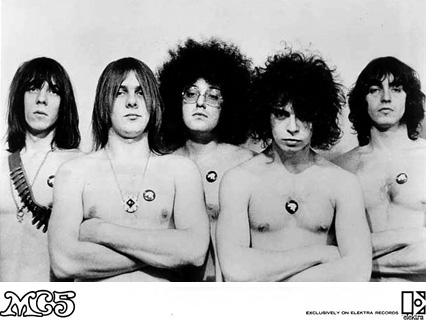
“Over and Over” by MC5
was my favourite song two months ago. I now listen to it once every two days. I didn’t realize how awesome this band was until I got their second and third records this year--they’re like Live at Leeds with more tambourine, more politics and less drum fills. This is the kind of raw, unhinged tuneage that kind of makes me rue the fact that the computer is now our most important musical instrument. The singer, who is extremely ugly, has one of those great screaming white soul voices that would have no chance in the auto-tune era and his slightly less ugly band plays with that classic early seventies tight-but-loose feel that’s all but impossible to pull off in the click track-dominated, cut and paste musical world of 2010.


“Stylo” by Gorillaz was my favourite song of all time three months ago. I now listen to it once in a while. This is the kind of perfectly constructed, perfectly produced track that kind of makes me delighted about the fact that the computer is now our most important musical instrument. I especially love the part when the backup singers start to chant “Overload! Overload! Comin’ on to the...”, and I also really love the part when Bobby Womack (who is probably not Damon Albarn) sings “If this love is electric, it’ll be flowing on the streets. Night after night, just to get through the week. Sometimes it’s hard. Right now!" I also really love that Gorillaz is now a real band instead of cartoons, because Damon Albarn is a genius.

Labels:

Monday, November 01, 2010

On Black Mountain and the importance of originality in evaluating art


Is an unoriginal band an uninteresting band?

Black Mountain is an entirely unoriginal five-piece rock band from Vancouver. You can easily trace everything the band does—the songs, sound(s), schtick, and singing—back to 1970s psychedelic-, prog- and proto-metal-rock acts like Led Zeppelin, Black Sabbath, Deep Purple, King Crimson, and Emerson, Lake and Palmer, often right down to particular keyboard tones and/or drum fills.

Black Mountain also offers a far more straightforward pastiche than an act like, say Grizzly Bear, who, while drawing inspiration from The Beach Boys, also filter and fuse that influence to create something that’s at least partly original. One critic I just read described Black Mountain’s music as “timeless” but I think he musta been an idiot, cause this is seventies music through and through.

Not that there’s anything wrong with that. I’m a Black Mountain fan and I find their work interesting. I grew up listening to a lot of the same bands they’re influenced by and believe they have the skills and talent to write and perform this type of music in a satisfying way. For example, Steve McBeard is a sick guitarist, Joshua Wells is a sick drummer, Jeremy Schmidt is a sick keyboard player and Matt Camirand is a competent bassist. Amber Webber, though, who co-sings lead with McBean, is probably the most important band member. First of all, she’s almost certainly a better singer than you are. Secondly, she’s a woman, so when she wails and moans, it makes us think of “The Great Gig in the Sky” instead of Ronnie James Dio, and her powerful piping provides a perfect contrast to McBeard’s Reed-inspired deadpan (though The Bearded One does emote a lot more on the band’s latest album).

Black Mountain has so far produced three albums that, despite their rooting in traditional genres, cover a lot of musical territory, from Zeppelin-inspired Englishcottagefolk to Zeppelin-inspired monsterriffage to Zeppelin-inspired swampbluesrawk. Also, they’re a really cool-looking band. A lot of other people, including “serious music fans” and “music critics,” share my opinions. So Black Mountain has “cred.”

Still, I would argue that Black Mountain’s traditionalism holds their work back from entering the realm of Great Art. Timeless, groundbreaking, risky, important; their work is none of these things. It’s like this: I’m a huge Group of Seven fan. I think those dudes made some important and timeless and groundbreaking and risky paintings. Also, I like the way their paintings look. Now if some young artist came along today and started painting stuff that looks like Group of Seven, I’d go, “I like the way this looks.” But I wouldn’t argue that dude is making important or timeless or groundbreaking or risky paintings. I certainly wouldn't argue that dude was making Great Art. So while completely unoriginal bands might be interesting, they’re never going to be important.

Labels:

Thursday, October 14, 2010

Why Black Mountain is cool

Watch to 1:40, at least.

Labels:

Monday, May 31, 2010

Marco: The Mix Tape (Tracks 6 & 7)

7. Spiritualized-Ladies and Gentlemen We Are Floating In Space

8. Wilco-I Am Trying to Break Your Heart

I consider myself a serious student of rock and pop music and my favourite kind of study involves individual artists or groups. When I reached university, I finally dropped my somewhat rigid “all music made after 1975 sucks” stance and got really into these two bands.

First of all, let me explain that they’re not really bands: Spiritualized is Jason Pierce, who goes by the stage name J Spaceman, and Wilco is Jeff Tweedy, who goes by the stage name Jeff Tweedy. I have listened to every record Spaceman and Tweedy have ever officially released, including their solo projects and work with the bands Spacemen 3 and Uncle Tupelo. I’ve also listened to a ton of bootlegs by both men. I’ve read interviews, biographies, and reviews of each artist. I’ve watched their videos (official and non) on DVD and on YouTube. I’ve even written essays (see below) and numerous blog posts and columns about them.

When I get into a band or an artist, I want to learn everything there is know about them. I want to understand their methods, their backgrounds, their strengths and flaws. I am, in short, intensely curious. And it’s this kind of intense curiosity, not just about art, but about life in general, that I want to pass on to my students when I become a teacher.

Here's a longer, kinda humourless piece I wrote on J Spaceman, for those who might be interested:

There’s a genre they call “blue-eyed soul.” It refers to white artists who play and sing music that sounds like black music. Think of Dusty Springfield, Van Morrison, Amy Winehouse, Hall & Oates, etc.

There’s a genre they call “psychedelic soul.” It generally refers to black artists that incorporated elements of sixties psychedelic rock into their R&B and soul sounds. Think of The Temptations under Norman Whitfield, Sly & the Family Stone, Funkadelic, Curtis Mayfield, etc.

Though his eyes are blue and his music draws much of its inspiration from gospel, blues and soul, J Spaceman, founder and auteur of Spiritualized, is not a blue-eyed soul artist. His rhythms are never syncopated, his singing is never gritty and his songs are never danceable.
Consider this quote from a 2003 article in Playlouder magazine, referring to Spiritualized’s most acclaimed record, Ladies and Gentlemen We Are Floating In Space: “For all the horns and gospel choirs and Dr John piano licks, it's a fundamentally classical, funk-free sound: one need only compare

Spiritualized's Stay With Me to the shuddering Lorraine Ellison classic on which it's loosely based to gauge the difference between Pierce's white light/white heat ‘Spiritualization' and the choked agony of black soul.”

To call Spaceman a psychedelic-soul artist would be stretching the definition of the label. His use of the wah-wah pedal, for example, shares nothing in common with the Hendrix-ian style that all the acts mentioned above borrowed from.

Instead, Spaceman has turned that definition of psychedelic soul on its head and created something we might call space-soul.

Spacemen first recorded “Shine a Light” for Spiritualized’s 1992 debut, Laser Guided Melodies, but that version is rather limp and tepid. Over the years, though, Spaceman has transformed the song in live performances and on his most recent tour, in 2008, he performed the definitive arrangement, that seamlessly blends the power and majesty of the best gospel music with the transcendental noise and feedback first pioneered by The Velvet Underground. Here it is, from the Pitchfork Music Festival.


Ladies and Gentlemen We Are Floating in Space, from 1997, saw Spaceman take his earlier experiments with soul and gospel to their logical extent. Speaking about his writing, producing, and recording method, he told The Varsity newspaper, “But it's normal for pop music to have backing singers, strings, a horn section and then a rock n' roll band—it's like Elvis In Memphis, it's Captain Beefheart on Clear Spot, it's Sly and the Family Stone's There's A Riot Goin' On. But we didn't want to do a regular session. We wanted to make something that was as unique as those records, but I didn't want to make the same records.”

On the album’s second track, “Come Together,” Spacemen mashes the dirty, explosive rock of Detroit’s MC5 (who, not coincidentally, recorded a song with the same title on their famous debut) with Phil Spector’s classic Wall of Sound production style. The effect, seen here on the Live with Jools Holland show, is mind-blowing.


Lastly, we end with “Lay Back In the Sun,” possibly the finest song in the Spiritualized catalogue. Spaceman has recorded at least four complete versions of the track but this version—accompanied by a decent mash-up of other Spiritualized videos—is by far the best, giving great prominence to the blowing Stax horns and the deeply soulful backing vocals.


Labels: , , ,

Monday, May 24, 2010

Marco: The Mix Tape (Track 5)

Stevie Wonder-Uptight (Everything’s Alright)

My friend Daniele (better known as Jim—don’t ask) and I got really interested in making videos in high school. It started when our Grade 11 English teacher let us film a scene from Lord of the Flies as part of our unit on that book. We filmed and edited it using analog equipment. I haven’t seen that video in a long time but I’m sure it’s equally terrible and hilarious.

Still, we were very proud of the accomplishment and over the next couple of years, we made a series of films as class projects under our unregistered company named, Uptown Films (An Infinity Production), eventually getting our hands on a digital camera and editing software. These films included an anti-drinking public service announcement for English Media (set to Steppenwolf’s Magic Carpet Ride and featuring our friend Marco simulating vomiting in a toilet), a bizarre series of sketches for Paul’s philosophy class (including a slow motion scene of a rook taking a pawn), and a short movie about John Gotti’s rise to power (titled The Family and featuring a soundtrack strangely similar to the one used by Martin Scorsese in Goodfellas). One of the many highlights was our preview for The Family, which aired before another video we made for a law class.

In OAC, Jim and I decided to create our piece de resistance, a commemorative film of our class’s final year in high school. I had my video camera with me every day that year and compiled hours and hours (and hours) of footage, covering everything from the boys’ soccer team championship run to Variety Night to Paul locking the DeCiantis brothers in the girls’ washroom. When Jim and I sat down to edit the thing, the only music we had with us was a four-CD Motown box set I’d recently purchased from Columbia House music club. The film opens with an in-car view of a drive up to St. Basil-the-Great College school, with the backing soundtrack provided by Lil’ Stevie and the Funk Brothers playing this track. We showed the video to our class on the last day of school and offered copies for $15. We sold out. One person also asked if he could also have a copy of the soundtrack.

Labels: ,

Saturday, May 22, 2010

Marco: The Mix Tape (Track 4)

Pink Floyd-The Great Gig in the Sky

Grade 11 was pivotal: I failed my driver’s test three times, I joined my first band, and I got my first copy of Dark Side of the Moon. I also launched Rock Is Dead-Long Live Rock, a website dedicated to reviewing albums from my collection. Looking back on them today, some of the reviews were actually pretty well-written; some (perhaps most) were dreadful, even for a teenager. But I put myself out there, I got a small audience and I practiced my writing, active listening, and research skills. And my rating system was kind of funny: I gave albums a score out of 11, a nod to Spinal Tap’s famous amplifiers. Only five albums ever received that score and Dark Side of the Moon was one of them. At the risk of serious embarrassment, here’s the full review:
Dark Side of the Moon
Best Song: Time, or Breathe, or Money, or The Great Gig in the Sky...pretty much anything except Any Colour You Like

This is the smoothest album I've ever heard. It's also one of the best. Yes I know that the cool thing for critics to do is to find faults with the albums that get proclaimed as "the best of all-time", after all I did it with Sgt. Pepper's Lonely Hearts Club Band. But I really can't find any faults with this masterpiece.

Everything about this record appeals to me. Roger Waters' simple but strong lyrics about the meaninglessness of everyday life; the cool and crazy special effects like the cash registers playing in 7/4 time in the intro to "Money" or the orchestra you can faintly hear playing at the end of the album (apparently they're playing the Beatles "Ticket to Ride" but I can't really tell); David Gilmour's rich vocals and smoother than silk guitar playing; and the gorgeous melodies throughout the album. There's a rumour that this album can be synced with The Wizard of Oz and I've checked out some sites which claim its true. I haven't really got the time to try it out though. (Note: I have since confirmed this rumour.)

Labels:

Friday, May 14, 2010

Marco: The Mix Tape (Track 3)

Led Zeppelin-No Quarter

A common Zeppelin fan’s narrative goes something like this: 14-year-old boy discovers Zeppelin through dad’s old record collection, obsesses over Jimmy Page’s guitar tone, John Bonham’s thick drumming, John Paul Jones’ mysteriousness, and Robert Plant’s tight pants for three-to- five years, occasionally writes “Zeppelin Rules” on his notebooks and binders, then moves on to more mature adult bands and artists. It’s true that Led Zeppelin were a lot of things for me in high school: a musical inspiration, a substitute for girls, an excuse to play air guitar. And it’s true that at one time I thought I was so over Zeppelin. But like any addiction, a teenager who falls for this band never fully recovers , and these days, I feel no shame in getting the Led out. One of the great things about Zeppelin is that they were never afraid to try something new; they didn’t have a Sound, so much as they had Sounds. I demand creativity and risk-taking from my artists, and Zeppelin, despite their occasional cock rock tendencies, was never afraid to go somewhere strange and dangerous.

(P.S. I really hate the way Robert Plant sings this version of the song, which comes from the generally awful The Song Remains the Same film. However, if you can get past that, the keyboard and guitar solos (with a ridiculous fantasy sequence featuring JPJ!) are sick.)

Labels:

Saturday, May 08, 2010

Marco: The Mix Tape (Track 2)

The Who Young Man Blues

I didn’t really get into music until my intermediate years. Before then, my love was sports, hockey in particular. As a die hard Leafs fan and four-times-a-week Downsview Beavers goalie, I spent most of my waking hours thinking about ice, skates, pucks and sticks. One day, when I was about 12, my dad came home with a CD called Who’s Missing by a band named The Who. For some reason, I kept playing this album over and over and over and a few weeks later, my dad came home with another CD called Who’s Greatest Hits. The hockey affair was over the first time I lifted my stick to use as an air guitar, though I continued to play the game for another year or so. In my final season, I had a pre-game ritual of listening to The Who’s Live at Leeds (on tape!) prior to every game. This track, a cover of an old Mose Allison blues tune, was always a favourite and the fact that its lyrics resonated so deeply with my 13-year-old self is probably not a coincidence.


Labels: ,

Friday, May 07, 2010

Marco: The Mix Tape (Track 1)

The Beatles The End

For the Ursis, The Beatles are The Bible. My father and mother were huge fans of the band in their youths and passed on The Passion of the Fab Four to me and my two sisters, Danielle and Lisa. We know every record. We know most of the dialogue in A Hard Day’s Night, Help!, and even The Beatles Anthology by heart. Danielle, the most devout believer, has probably purchased more than $1,000 worth of lunch boxes, buttons, mugs and bootlegs from the now defunct Beatlemania shop in downtown Toronto. And where many kids played House, we played Band, and more often than not, the Band we played was The Beatles.

Many family dinners were spent on Favourite Beatle debates and though I remain partial to John, I do hold a soft spot in my heart (and my hands) for Ringo; after all, the Big Nosed One was my first drum teacher. Around Grade 7, I decided I wanted to play the skins. Only trouble was I didn’t have any. To alleviate this minor snafu, I arranged some chairs into something resembling a kit, put on one of my dad’s workboots to replicate the booming bass drum sound, and started banging along with The Beatles. When my Grade 8 music teacher asked me to play a solo for our spring concert, I duplicated Ringo’s solo from this Abbey Road track and got a massive ovation. As for my lack of drumset problem, I played the chairs for two whole years before Nonno Joe—sick of my banging on the table every time I visited his house—decided to buy me my first kit for Christmas.

Labels: ,

Sunday, May 02, 2010

On becoming literate, part two

In my teen years, I became addicted to rock and roll. I bought CDs by the handful. I took up drums. I started collecting band discographies--first The Who, then Led Zeppelin, then Pink Floyd. I’d visit the library to borrow and read every rock and roll history book they had. Rock music even infiltrated my hockey world - I developed the superstition of listening to Live at Leeds before every game (goalies being the superstitious type). The time and energy I'd once spent on Doug Gilmour, Damien Cox, and developing my butterfly technique was now being spent on David Gilmour, Dave Marsh, and developing my drum roll.

When my family got an Internet connection, I spent most of my web time reading three websites: Mark's Record Reviews, George Starostin’s Music Reviews, and CosmicBen's Record Reviews (at least when I wasn't as updating my wrestling column). As their titles would suggest, these websites were one-man operations, dedicated to reviewing albums both past and present. Prindle, who still keeps at it, had the wackiest style of writing I'd ever seen: off-the-cuff, stream-of-consciousness reviews that somehow always seemed to pick out the soul of an album. Starostin, a Russian writing in English, was amazing for his productivity; at one point, the guy seemed to be churning out multiple 1,000-plus word reviews daily. And CosmicBen was an insightful and intelligent critic with none of the pretentious, holier-than-thou attitude that still occasionally plagues more widely read music sites. These idiosyncratic and passionate writers gave me an education in rock music and music writing that I couldn't get anywhere else.

So I decided to be one of them. Sometime late in 1998, when I was seventeen, I launched my own personal music review site: Rock Is Dead - Long Live Rock. At the time, I owned about 100 CDs. Over the next five years, I published over 120 album reviews, sixteen concert reviews, five shorts stories, six short essays, and a series of fast food restaurant reviews. I updated inconsistently, my prose was riddled with typos and grammatical errors, and some of the opinions I spouted were just plain stupid. It’s painful for me to read some of what I wrote then now. Still, I had the occasional bit--a paragraph, a sentence, a word--that I can look back on with pride. I took the site down from the Internet when I got my first full-time job in journalism. This time, though, I backed up the files.

Labels: , ,